The Kitchen Leak That Hid for Six Weeks
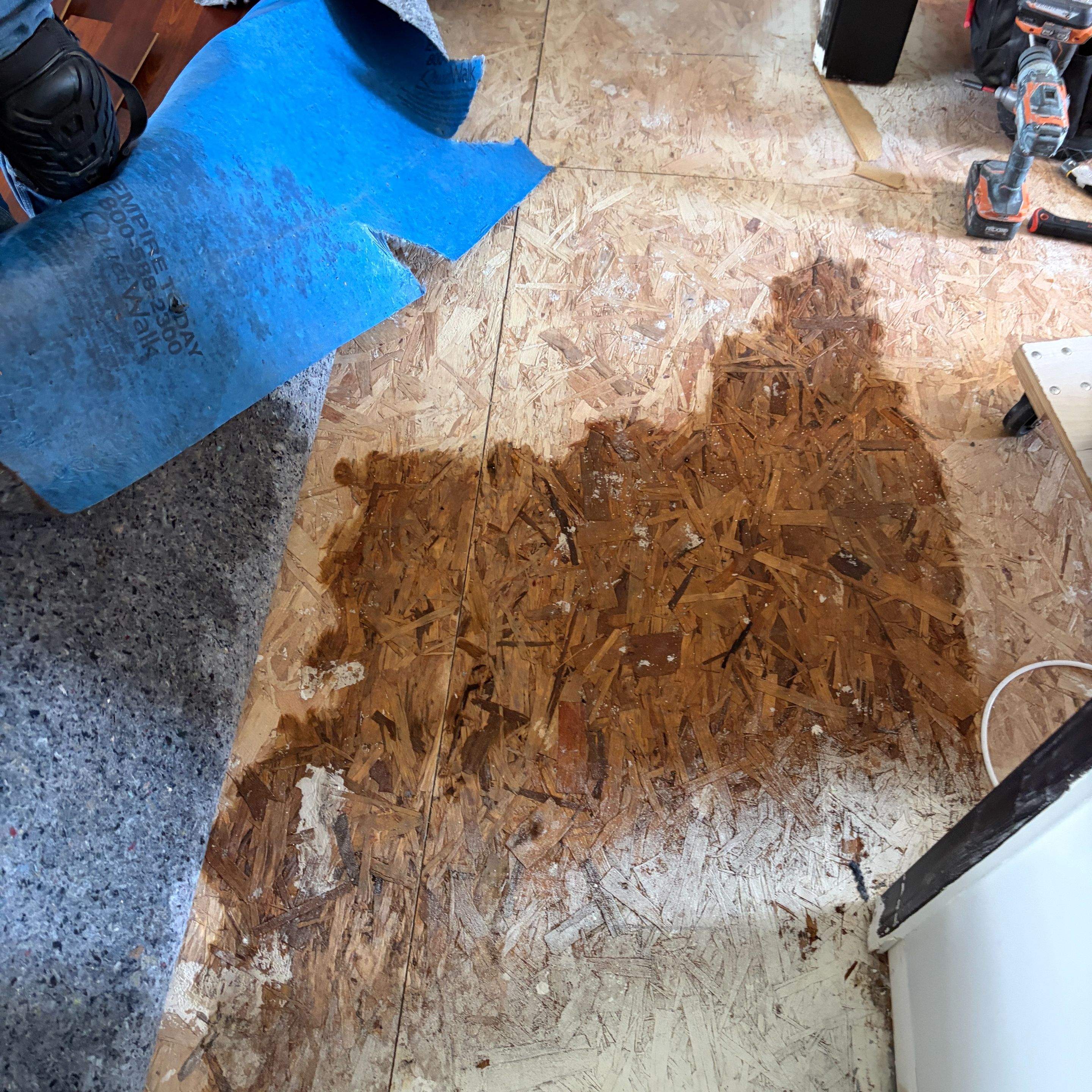
A Honey Creek homeowner called us in late spring because her hardwood floor in front of the dishwasher had started cupping. She had noticed a small drip about a month and a half earlier, dried it with a towel, and moved on. When our technician pulled the kick plate, the subfloor underneath was saturated and the back of the cabinet was covered in a fuzzy gray-green growth. Moisture meter readings in the adjacent drywall were sitting at 28 percent, well above the 16 percent threshold where mold stops being a question and starts being a guarantee.
Here is what nobody tells you about slow leaks. The water does not need to be visible to feed mold. As long as relative humidity inside the wall cavity stays above 60 percent and the temperature sits between 60 and 80 degrees, you have an active growth environment. That kitchen had been a petri dish since the first drip. We ended up removing 14 linear feet of cabinetry, replacing roughly 32 square feet of subfloor, and running a containment with negative air for four days. Total invoice came in around $6,400. Had she called us when she first saw the drip, we would have pulled the dishwasher, dried the cavity with an injection drying system, and been out the door for under $1,500. The math on early intervention is brutal, and it never favors waiting.
The Basement Nobody Wanted to Talk About
Another call came from a homeowner in Honey Creek who had a sump pump fail during a March storm. He bailed the basement himself over a weekend, ran a couple of box fans, and figured he was fine. Eight months later his daughter developed a chronic cough that her pediatrician traced back to mold exposure. When we arrived for the inspection, the carpet had been replaced but the pad underneath was original, and the bottom 18 inches of drywall lit up our moisture meters like a Christmas tree. Mold had colonized the back of the drywall, the framing, and the insulation behind it.
This is the part that frustrates us most. DIY basement drying almost never works because residential fans cannot move enough air to dry framing inside a wall cavity. You need commercial-grade air movers pushing 2,500 to 3,000 CFM combined with dehumidifiers pulling 130 plus pints per day. We cover the full process in our guide to flooded basement cleanup and professional drying, and the short version is that what looks dry to your hand can still be 22 percent moisture on a meter. That homeowner spent around $11,000 on remediation that would have been a $3,200 emergency dry-out had he called us the morning after the pump failed.
The Attic Surprise During a Home Sale
One Honey Creek seller called us two days before her closing date because the buyer's inspector had flagged black staining on the north-slope roof sheathing. She was panicking, certain the deal was going to collapse. When we got into the attic, the story was straightforward. A bathroom exhaust fan had been venting directly into the attic instead of through the roof, dumping warm humid air against cold sheathing every time anyone showered. The result was textbook condensation mold across about 90 square feet of plywood. We were able to scope the remediation, document the cause, and get the work done in 48 hours. The buyer accepted the report, the closing happened on schedule, and the seller learned that attic ventilation issues are one of the most common hidden mold sources in older Honey Creek homes.
The Insurance Conversation
A Honey Creek couple called us last fall after their insurance adjuster told them mold was excluded from their policy. That is not quite how it works. Most homeowners policies exclude mold caused by long-term neglect or maintenance failures, but they typically cover mold that results from a sudden, covered water loss as long as you reported it promptly and mitigated it reasonably. The key phrase is reasonable mitigation, and that is where our documentation earns its keep. Detailed moisture logs, psychrometric readings, and photo records of the source give the adjuster what they need to approve the claim. If you are dealing with an active water loss right now, our overview of water damage restoration in Honey Creek walks through the timeline that protects both your home and your claim.
Prevention That Actually Works
The Honey Creek homeowners who never call us a second time tend to do the same handful of things. They run a dehumidifier in the basement from May through September and keep it under 50 percent relative humidity. They replace washing machine supply hoses every five years and install braided stainless steel lines. They test their sump pump every spring and keep a battery backup. They watch for staining around toilet bases, under sinks, and at the bottom of exterior walls. When something looks off, they investigate the same day instead of waiting for it to dry on its own. For homes with a history of basement moisture, the playbook in our sump pump failure and basement flooding solutions guide is worth keeping bookmarked.
What Mold Remediation Actually Looks Like
When Honey Creek Water Restoration arrives at a Honey Creek property with confirmed mold growth, the work follows IICRC S520 standards, and it is not a spray-and-pray operation. The technician will set up containment with 6-mil poly sheeting and zipper doors to isolate the affected area. Negative air machines with HEPA filtration run continuously to keep spores from migrating into clean parts of the home. Porous materials with visible growth (drywall, carpet pad, insulation, soft baseboards) get removed and bagged. Semi-porous materials like framing get HEPA-vacuumed, treated with an EPA-registered antimicrobial, and sanded if needed. Then everything dries to industry-standard moisture content before reconstruction starts.
What you should expect to see on a properly run job:
- Documented moisture readings at the start, daily, and at clearance
- Photo documentation of all affected materials before removal
- Containment that stays sealed for the duration of the job
- Air scrubbers running 24 hours a day, not just when crews are on-site
- A post-remediation verification protocol before any drywall goes back up
If a company quotes you a mold job without mentioning containment, moisture mapping, or third-party clearance testing, get a second opinion. We will tell you directly if your situation does not need full remediation. Some surface mold on a non-porous surface in a well-ventilated area is a $300 cleaning, not a $5,000 project, and we are not going to pretend otherwise.